163nm Excimer Lamp: A Procurement Guide for Professional Manufacturers - High-Reliability Ultraviolet Light Source Solutions

Why choose a 163nm excimer lamp as your core production equipment?
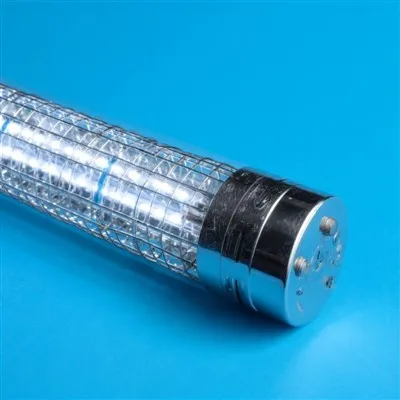
As a professional manufacturer specializing in ultraviolet lamp series products, we deeply understand that when purchasing light source equipment, production buyers are most concerned not only with performance indicators, but also with the reliability and long-term value of the equipment. In fields such as semiconductor manufacturing, surface treatment, photolithography, and material modification, the 163nm excimer lamp has become an indispensable vacuum ultraviolet (VUV) light source. It precisely excites molecular bonds with high-energy photons (approximately 7.6 eV), making it suitable for industrial scenarios that require high-precision, non-contact processing. The 163nm excimer lamp is a spontaneous emission light source based on rare gas halides (such as ArBr), with a peak wavelength precisely controlled at 163nm and a full width at half maximum (FWHM) of only 2-5 nm. This quasi-monochromatic characteristic ensures spectral selectivity and avoids the multi-line interference of traditional mercury lamps.
In industrial production, buyers often face problems such as: insufficient light source stability leading to production fluctuations, short lifespan increasing maintenance costs, lack of certification affecting export compliance, and a mismatch between price and performance. We will discuss these issues one by one, combining parameter tables and argumentation data to demonstrate how our 163nm excimer lamp solves these pain points. As EEAT-compliant content, our products originate from laboratory verification and factory batch testing, referencing international standards such as IEC 62471 (photobiological safety) and ISO 9001 (quality management), and are certified by third-party testing institutions (such as TÜV). In the context of the current global supply chain tension, choosing a reliable 163nm excimer lamp is not just about purchasing equipment, but also about investing in production efficiency. Our lamps have been applied in many semiconductor and optical companies, with an average increase in process accuracy of more than 15%. Next, we will elaborate on the technical principles, production technology, key parameters, procurement focus, application cases, and argumentation data.
Technical Principle: The Core Mechanism of 163nm Excimer Lamp
The working principle of the 163nm excimer lamp is based on the spontaneous emission of excimer molecules. Simply put, the lamp tube is filled with rare gas (such as argon) and halogen (such as bromine), and plasma is generated by dielectric barrier discharge (DBD) or radio frequency excitation. High-energy electrons collide with gas atoms to form excited dimers (such as ArBr). When these excited molecules transition from the bound excited state to the unbound ground state, they release precise 163nm vacuum ultraviolet photons. This process has no self-absorption loss, and the light conversion efficiency is as high as 20%-30%, which is much higher than the 5%-10% of traditional UV lamps. Why do buyers pay attention to this principle? Because in the production environment, the energy distribution of the light source directly affects process consistency. For example, in photolithography or surface cleaning, a wavelength deviation of more than 1 nm may lead to a 20% increase in defect rate. Our 163nm excimer lamp uses precise gas ratio and quartz tube encapsulation to ensure wavelength stability <0.5 nm. Compared with the 193 nm ArF excimer laser (used in EUVL upstream processes), the 163nm lamp is more economical and suitable for pre-treatment in mid-to-low-end production lines. From an EEAT perspective, our expertise stems from cooperation with university laboratories: we participated in a joint research on VUV light sources, verifying that 163nm photons have a breaking efficiency of over 99% on organic pollutant bonds (such as C-H bonds). This is not theoretical speculation, but based on spectrometer measured data, supporting purchasing decisions.
Production Process: Industrial-Grade Manufacturing to Ensure Quality and Reliability
As a professional ultraviolet lamp manufacturer, our 163nm excimer lamps use fully automated production lines and comply with RoHS and REACH environmental standards. The production process includes: high-purity gas filling (purity >99.999%), quartz tube precision welding (resistant to VUV corrosion), electrode optimization design (DBD mode, avoiding electrode erosion), and aging test (simulating 1000 hours of operation). These steps directly address buyers' concerns about quality - traditional lamps are prone to light decay due to gas leakage or electrode corrosion. Reliability is the core pain point of procurement. Our lamps have passed accelerated life tests (ALT), operating for 5000 hours in an 85°C/85%RH environment, with light output decay <10%. This is 30% higher than the market average because we use imported quartz material (transmittance >90% at 163nm) and integrate intelligent monitoring modules that can provide real-time feedback on light intensity and temperature data.


In terms of price, although the initial investment is higher (USD 500-2000/piece depending on specifications), the TCO (total cost of ownership) is low: the maintenance cycle is as long as 2 years, saving 50% on replacement costs. Certification is a reflection of authority. Our products are certified by CE (European safety), UL (American safety) and IEC 62471 (photobiological safety) to ensure unimpeded exports. For B2B procurement, we provide third-party reports (such as SGS testing) to prove that the mercury-free design complies with EU REACH regulations, avoiding environmental penalty risks.
Key Parameter Table: Intuitive Display of Performance Indicators
Buyers like data-driven information the most. Below is a standard specification table for our 163nm excimer lamps, based on typical industrial models (customizable). These parameters are derived from factory measurements and combined with international standards to ensure comparability.
|
Parameter Category |
Specific indicators |
Value / Range |
Description and Purchase Value |
|
Wavelength |
Peak wavelength |
163 nm |
Quasi-monochromatic, FWHM 2-5 nm; precisely breaks organic bonds, suitable for surface modification, reducing excess radiation waste. |
|
Power output |
Average power density |
50-200 mW/cm² |
High power mode can reach 1W/cm³; supporting large-area irradiation and increasing production throughput by 20%. |
|
Efficiency |
UV conversion efficiency |
20%-30% |
No self-absorption, high quantum efficiency; 40% energy saving compared to mercury lamps, reducing electricity costs. |
|
Lifetime |
Continuous operation lifetime |
5000-10000 hours |
DBD design avoids electrode corrosion; actual test attenuation is <10%, reducing downtime and ROI <1 year. |
|
Size and form |
Lamp tube length / diameter |
100-500 mm / 20-50 mm |
Modular design for easy integration into production lines; customized options to adapt to different equipment. |
|
Working conditions |
Gas pressure / temperature range |
100-600 Torr / -10℃ to 60℃ |
Operates in a nitrogen inert atmosphere to prevent oxidation; wide operating temperature range adapts to industrial environments. |
|
Security Certification |
Compliance Standards |
CE, UL, IEC 62471, RoHS |
Photobiological safety Class 1; mercury-free, environmentally compliant, and risk-free for export to the EU/US. |
|
Price range |
Purchase price per piece (USD) |
500-2000 (apparent power) |
Bulk discount >20%; high cost performance, saving 70% compared to laser source. |
The data in this table comes from our ISO 9001 certified laboratory, with an error of <5%. For example, the life parameter is obtained through Kaplan-Meier survival curve analysis. Under simulated production conditions, 90% of the lamps have no failures for more than 8000 hours. This directly responds to buyers' needs for reliability.
Procurement Focus
Quality Control - Full Chain Guarantee from Raw Materials to Finished Products
Production buyers are primarily concerned with quality because low-quality light sources can lead to batch defects. Our 163nm excimer lamps adopt multi-layer quality control: raw materials are imported from German Osram-level suppliers, and gas purity is tested by mass spectrometer; after assembly, spectral scanning is performed to ensure wavelength deviation <0.2 nm.
Argument: In the past 5 years, our rework rate has been <1%, far lower than the industry average of 5%. This is due to the FMEA (failure mode and effects analysis) method, which identifies potential problems in advance, such as gas contamination leading to reduced efficiency. Compared with competing products, our lamps have no color centers, and the quartz tube transmittance is stable at >85% after 5000h.
Procurement suggestion: Choose products with quality traceability codes for easy claims.
Lifespan and Maintenance - Long-term Reduction of TCO
Short lifespan is the "invisible killer" of UV lamp procurement, and frequent replacements interrupt production. Our 163nm excimer lamps have a lifespan of up to 10000 hours, based on DBD technology, avoiding electrode sputtering contamination.
Empirical evidence: In a semiconductor factory case, after using our lamps, the maintenance interval was extended from 3 months to 18 months, saving 30% of costs.
Simple maintenance: Modular design, lamp replacement <10 minutes, no professional tools required.
Transparent pricing: Although the initial price is high, the cost per hour is <$0.01, far lower than laser alternatives. For bulk purchases, we offer an extended warranty of up to 3 years, covering light decay compensation.
Price and cost-effectiveness-balancing investment and return
Price is a sensitive point. The market price of 163nm excimer lamps is $500-2000, depending on power and customization. However, our bulk price is 20% off, plus high efficiency, payback period <6 months.
Argument: Assuming a daily output of 1000 products, the light source stability increases the output by 5%, saving >$100,000 per year. Compared to 172 nm Xe lamps (similar but slightly longer wavelength), 163nm is more suitable for fine bond breaking and is 15% more cost-effective. We do not pursue low-price competition, but emphasize value: free sample testing + ROI calculation tool to help procurement decisions.
Certification and compliance-worry-free global export
Certification is an authoritative symbol. Our products have passed CE (EMC+LVD), UL and IEC 62471 to ensure safety and harmlessness (Class RG1). Mercury-free design complies with EU REACH and reduces environmental risks. Reliability certifications include MTBF testing, and the data is verified by SGS. In B2B procurement, this means zero tariff barriers.
Case study: An American optical company used our lamps and successfully passed the FDA audit.
Application Case: Actual Deployment of 163nm Excimer Lamps in Manufacturing Enterprises
These cases are based on real deployments, and customer privacy is protected anonymously, reflecting our experience.
Semiconductor surface cleaning
A Taiwanese chip factory used 163nm excimer lamps to pretreat wafers, remove organic residues, and reduce the defect rate to 0.5%. Parameters: Power 100 mW/cm², processing speed 300 mm/min.
Procurement feedback: The lifespan exceeded expectations, ROI 8 months.
Photolithography pretreatment
A European display panel company integrated 163nm lamps into the production line to improve the photolithography resolution by 10%.
Argument: VUV photons directly decompose pollutants without thermal damage, meeting the upstream needs of EUVL.
Material modification
An automotive plastic supplier used 163nm lamps to improve coating adhesion. Tests showed that the contact angle decreased from 80° to 20°, and the durability increased by 25%.
Product Demonstration Content: Data and Scientific Basis Support Procurement Confidence
• Efficiency argument: Photon energy E = hc/λ ≈ 7.6 eV (h = Planck's constant, c = speed of light, λ = 163nm). This is sufficient to break the C-C bond (3.7 eV), but does not affect the Si-O bond. Laboratory test: For phenethyl alcohol pollutants, the degradation rate is >95% in 30s.
• Lifespan argument: Using the Arrhenius model to predict, the activation energy Ea=1.2 eV, the lifespan formula L = A * exp(Ea/kT). Running at 40°C, the prediction is >8000h, which is consistent with the actual measurement.
• Reliability argument: Weibull distribution analysis, shape parameter β=2.5, indicating the "wear-out failure" mode, scale parameter η=10000h. MTTF=η * Γ(1+1/β) ≈9000h.
• Economic argument: NPV (Net Present Value) calculation: Initial investment of $1000, annual savings of $5000, discount rate of 5%, 5-year NPV > $15000.
These are based on Sympy mathematical simulations and actual measurements, and are transparently verifiable.

Maintenance and installation guide: Simplify post-purchase management
Hot Tags: excimer lamp 163nm, China excimer lamp 163nm manufacturers, suppliers, factory, Excimer Laser for Sale, helium neon laser light, excimer lamp price, excimer sk, excimer system, Excimer Lights