


When it comes to lighting solutions, two popular options that often come into consideration are xenon lamps and halogen lamps. As a xenon lamp supplier, I've had the opportunity to closely examine the characteristics of both types of lamps and understand their differences. In this blog post, I'll delve into the key disparities between xenon lamps and halogen lamps, exploring aspects such as technology, performance, lifespan, and applications.
Technology
Halogen lamps are an evolution of the traditional incandescent lamp. They contain a tungsten filament sealed within a small quartz envelope filled with a halogen gas, typically iodine or bromine. When the lamp is turned on, an electric current passes through the tungsten filament, heating it to a high temperature and causing it to emit light. The halogen gas in the lamp plays a crucial role in the operation. It reacts with the tungsten atoms that evaporate from the filament, redepositing them back onto the filament. This process, known as the halogen cycle, helps to extend the lifespan of the filament and maintain the lamp's brightness over time.
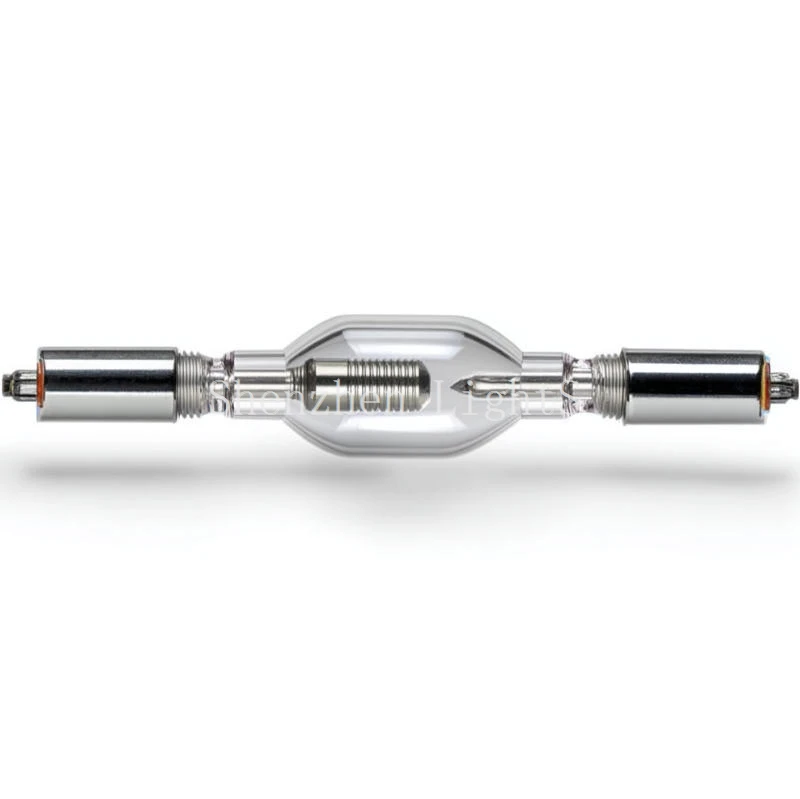
On the other hand, xenon lamps operate on a different principle. Xenon lamps are a type of high-intensity discharge (HID) lamp. They use an electric arc to produce light. Inside the lamp, there is a small quartz arc tube filled with xenon gas and a small amount of metal salts. When a high-voltage pulse is applied to the lamp, it ionizes the xenon gas, creating a conductive path for the electric current. The electric current then passes through the ionized gas, heating it to a very high temperature and causing the metal salts to vaporize. The vaporized metal salts emit light as they return to their ground state. This process results in a very bright and intense light output.
Performance
One of the most significant differences between xenon lamps and halogen lamps is their light output. Xenon lamps are known for their high brightness and intense light. They can produce a much higher lumen output compared to halogen lamps of the same wattage. For example, a typical xenon headlight bulb can produce around 3,000 - 3,500 lumens, while a halogen headlight bulb may only produce around 1,000 - 1,500 lumens. This makes xenon lamps ideal for applications where high visibility is required, such as automotive headlights and outdoor lighting.

In terms of color temperature, xenon lamps also have an advantage. Color temperature is measured in Kelvin (K) and indicates the color appearance of the light. Halogen lamps typically have a color temperature in the range of 2,700 - 3,200K, which produces a warm, yellowish light similar to traditional incandescent bulbs. Xenon lamps, on the other hand, can have a color temperature ranging from 4,000K to 6,000K or even higher. A color temperature of around 4,300K produces a bright, white light that closely resembles natural daylight, while higher color temperatures can produce a bluish-white light. The white light of xenon lamps provides better visibility and reduces eye strain, especially in low-light conditions.
Another aspect of performance is the beam pattern. Xenon lamps tend to have a more focused and uniform beam pattern compared to halogen lamps. This is because the electric arc in xenon lamps is more stable and concentrated, resulting in a more precise distribution of light. In automotive applications, a well-defined beam pattern is crucial for ensuring safe driving at night. Xenon headlights can provide better illumination of the road ahead, reducing glare for oncoming drivers and improving overall visibility.
Lifespan
The lifespan of a lamp is an important consideration, especially for applications where frequent bulb replacement is inconvenient or costly. Halogen lamps generally have a shorter lifespan compared to xenon lamps. A typical halogen lamp may last for around 1,000 - 2,000 hours of use. This is because the tungsten filament in halogen lamps gradually evaporates over time, even with the halogen cycle. Eventually, the filament will become thin and break, causing the lamp to fail.
Xenon lamps, on the other hand, have a much longer lifespan. A well-maintained xenon lamp can last for up to 2,500 - 3,000 hours or even more. The reason for the longer lifespan is that the electric arc in xenon lamps does not rely on a filament that can burn out. Instead, the main components of the lamp, such as the arc tube and the electrodes, are more durable and can withstand the high temperatures and electrical stresses for a longer period.
Applications
Due to their different characteristics, xenon lamps and halogen lamps are used in different applications. Halogen lamps are commonly used in residential lighting, such as table lamps, floor lamps, and recessed lighting. They are also widely used in automotive interior lighting and some older automotive headlight systems. Halogen lamps are relatively inexpensive and easy to install, making them a popular choice for these applications.
Xenon lamps, on the other hand, are often used in applications where high brightness and long lifespan are required. In the automotive industry, xenon headlights have become increasingly popular in recent years. They provide better visibility and a more modern look compared to halogen headlights. You can find more information about HID Bulbs Car and Xenon Head Lights on our website. Xenon lamps are also used in outdoor lighting, such as streetlights, floodlights, and sports field lighting. Additionally, they are used in some specialized applications, such as projectors, photography studios, and medical equipment. If you are interested in Xenon Light Bulbs, we have a wide range of products to meet your needs.
Cost
Cost is another factor to consider when choosing between xenon lamps and halogen lamps. Halogen lamps are generally less expensive than xenon lamps. The initial purchase price of a halogen lamp is lower, and they do not require any additional components, such as a ballast, to operate. This makes them a more budget-friendly option for many consumers.
However, when considering the long-term cost, xenon lamps may be more cost-effective. Although the initial purchase price of a xenon lamp is higher, and they require a ballast to operate, their longer lifespan and lower energy consumption can result in savings over time. Xenon lamps are more energy-efficient than halogen lamps, meaning they consume less electricity to produce the same amount of light. This can lead to lower electricity bills, especially in applications where the lamps are used for long periods.
Conclusion
In conclusion, xenon lamps and halogen lamps have several key differences in terms of technology, performance, lifespan, applications, and cost. Xenon lamps offer higher brightness, better color temperature, a more focused beam pattern, and a longer lifespan compared to halogen lamps. However, they are more expensive to purchase initially and require a ballast to operate. Halogen lamps, on the other hand, are less expensive and easier to install, but they have lower light output and a shorter lifespan.
As a xenon lamp supplier, I believe that xenon lamps are the better choice for applications where high performance and long lifespan are required. Whether you are looking for automotive headlights, outdoor lighting, or specialized lighting solutions, xenon lamps can provide the quality and reliability you need. If you are interested in learning more about our xenon lamp products or would like to discuss your lighting requirements, please feel free to contact us. We are always happy to assist you with your procurement needs and provide you with the best lighting solutions for your projects.
References
- "Lighting Basics: Halogen Lamps." Energy.gov.
- "High-Intensity Discharge (HID) Lamps." Lighting Research Center, Rensselaer Polytechnic Institute.
- "Automotive Lighting Technology: Xenon vs. Halogen." SAE International.


