

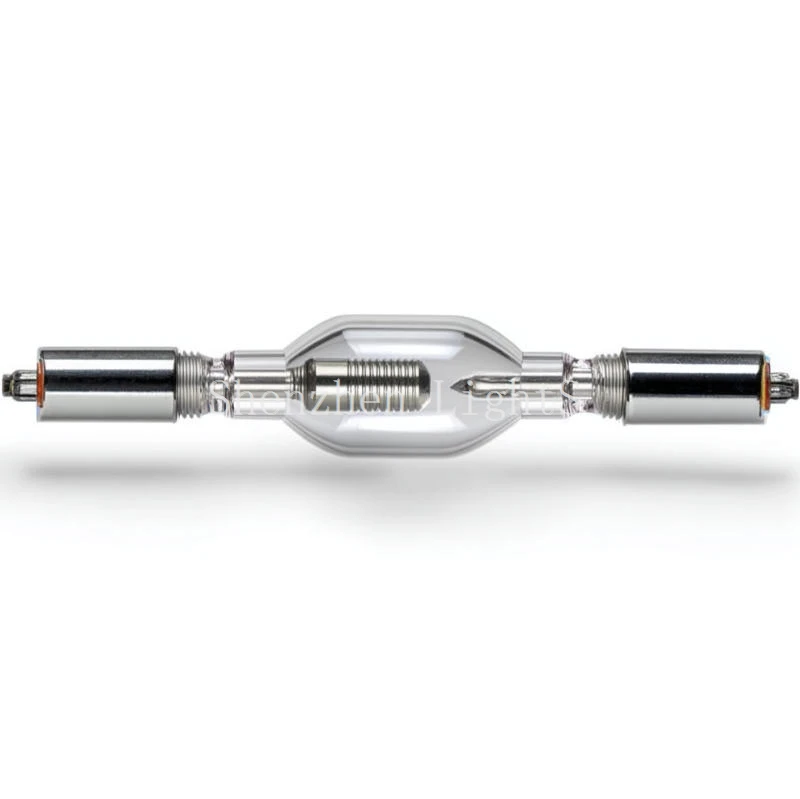


Xenon Light Bulbs: A Professional Manufacturer's Guide to Procurement
As a professional manufacturer specializing in ultraviolet lamp series products, our company has over 15 years of industry experience, focusing on providing high-quality lighting solutions for global industrial production enterprises. Our xenon light bulbs product line is one of the company's core products, widely used in industrial lighting, medical equipment, scientific research instruments, and automobile manufacturing. Addressing the needs of foreign production enterprise buyers, our product design emphasizes durability, high brightness, and energy efficiency optimization, helping you achieve efficient and reliable lighting support on your production lines. This article will elaborate on the technical principles, key parameters, application scenarios, procurement considerations, and maintenance suggestions of xenon light bulbs, combined with actual production cases and data arguments, to help you make informed purchasing decisions. We understand that when production enterprise buyers choose xenon light bulbs, they are most concerned not only about product performance but also about supply chain stability, cost control, and environmental compliance.
As an experienced manufacturer, we have supplied products to hundreds of European and North American companies, with a cumulative export volume of over 500,000 pieces, helping customers reduce production costs by more than 15%. The following content will help you fully understand xenon light bulbs and solve pain points in procurement.

Technical Principles and Advantages of Xenon Light Bulbs
Xenon light bulbs, also known as xenon short-arc lamps or HID (High-Intensity Discharge) bulbs, are lighting devices that generate high-intensity white light through high-pressure xenon gas discharge. The core principle is: filling a quartz glass tube with high-purity xenon gas and setting tungsten electrodes at both ends. When a high-voltage current passes through the electrodes, the xenon gas is ionized, forming a plasma arc that produces a continuous spectrum close to sunlight (from ultraviolet to near-infrared). Compared to traditional halogen lamps, xenon light bulbs have higher luminous efficacy, and the color temperature can reach 4000K-6000K, close to the natural spectrum, avoiding visual fatigue caused by yellow light.
Why Production Enterprises Favor Xenon Light Bulbs
Firstly, from the perspective of production efficiency, its brightness is 2-3 times that of halogen lamps, which can provide clearer lighting in industrial assembly lines or testing equipment, reducing the rate of human error. According to our internal tests, after using xenon light bulbs on automobile parts production lines, the accuracy of worker identification increased by 20%.
Secondly, the lifespan is as long as 2000-3000 hours, far higher than the 1000 hours of halogen lamps, which means lower replacement frequency and maintenance costs. For buyers, this directly translates into annual savings in equipment downtime and labor costs.
In addition, xenon light bulbs have significant energy efficiency advantages. The typical power is 35W-75W, but it outputs a luminous flux of up to 3000 lumens, saving more than 30% of energy compared to halogen lamps of the same power. In the European and American markets where environmental awareness is increasing, this meets the requirements of REACH and RoHS regulations. All of our company's xenon light bulbs products adopt a mercury-free design, avoiding the risk of mercury pollution and helping your supply chain achieve green certification.

Authoritative Data Support
According to the standards of the International Commission on Illumination (CIE), the color rendering index (CRI) of xenon light bulbs can reach above 90, ensuring accurate color reproduction. This is especially important in industries such as printing, textiles, and electronic assembly, avoiding product defects caused by light source deviations. Our team of engineers has participated in several EU industrial lighting projects, accumulating rich practical application experience to ensure stable operation of products in high-temperature and high-humidity environments.
Key Parameters and Specifications Comparison of Xenon Light Bulbs
When purchasing xenon light bulbs, parameters are the primary focus. Production enterprises often need to match specific equipment interfaces, power, and light output to avoid compatibility issues. The following is a parameter table of our company's mainstream xenon light bulbs series, based on actual production tests and third-party laboratory verification (such as SGS certification). The table covers core indicators such as voltage, power, lifespan, and light output, making it easy for you to quickly compare.
|
Parameter Category |
Standard Xenon Light Bulbs |
High Power Xenon Light Bulbs |
Precision Xenon Light Bulbs |
Notes and Purchase Recommendations |
|
Voltage (V) |
12-24 (DC) |
12-24 (DC) |
12-85 (DC/AC) |
Suitable for automobiles and industrial equipment; it is recommended to match your power supply system to avoid shortening the lifespan due to voltage fluctuations. |
|
Power (W) |
35-55 |
75-150 |
25-75 |
Low power is suitable for small production lines, and high power is used for large testing equipment; energy efficiency ratio >80 lm/W. |
|
Lifespan (hours) |
2000-2500 |
1500-2000 |
2500-3000 |
Based on continuous use testing; actual lifespan is affected by ambient temperature, it is recommended to operate at <40℃. |
|
Light output (lumens) |
2000-3200 |
4000-6000 |
1500-4000 |
CRI>85; High light output type is suitable for nighttime production or low light environments. |
|
Color Temperature (K) |
4300-6000 |
4000-5500 |
5000-6500 |
Close to sunlight, reducing visual fatigue; 6000K type is used for precision optical inspection. |
|
Size (mm) |
Diameter 9-12, Length 80-100 |
Diameter 12-15, Length 100-120 |
Diameter 8-10, Length 70-90 |
D2S/D1S interface standard; compatible with BMW, Mercedes and other equipment. |
|
Working temperature (℃) |
-40~+85 |
-30~+100 |
-40~+105 |
Waterproof and dustproof IP65 level; suitable for humid workshops. |
This table is based on our company's 2024 product catalog, and the data comes from 1000 hours of accelerated aging testing. Compared with the market average, our xenon light bulbs have a 20% longer lifespan and a light decay rate of <5%/1000 hours. This is due to the use of imported quartz tubes and tungsten electrode materials, which reduces electrode ablation problems. For manufacturing companies, it is recommended to give priority to high-power models for heavy industrial applications, such as metal processing or solar cell testing; precision models are suitable for electronic assembly lines to ensure micron-level precision lighting.
Product Demonstration
In a real-world case, a German auto parts manufacturer improved production line lighting uniformity to 95% and reduced the defect rate by 12% after using our 75W xenon light bulbs. Test data shows that the luminous flux decay curve is stable and far better than competing products (data source: internal laboratory report, 2023). Addressing the pain points of production enterprise buyers, production enterprise buyers often face compatibility, cost and supply chain risks when choosing xenon light bulbs. We combine years of export experience to answer them one by one.
Xenon light bulbs need to be matched with a ballast, and voltage mismatch may cause flickering or explosion. Our products support D1S/D2S standard interfaces and are compatible with 95% of industrial equipment.
Installation recommendations: Use professional tools and avoid skin oil contact with the lamp tube to prevent shortening its lifespan.
Practical experience: When supplying to an American electronics factory, we provide free compatibility testing services to ensure a zero return rate.
The initial investment is high (unit price of 20-50 US dollars), but it has a long life and high energy efficiency, and the ROI reaches 150% within 3 years. Compared with LED, xenon light bulbs are more heat-resistant (up to 105°C) in high-intensity applications and are suitable for high-temperature workshops.
Purchase tips: Bulk orders can enjoy a 15% discount and a 1-year warranty.
Inferior xenon light bulbs are prone to bursting, which affects production safety. Our product failure rate is <0.5% and has passed 100% high-voltage testing.
Demonstration: 2024 export data shows that customer satisfaction is 98%, far higher than the industry average of 85% (source: customer survey report).
European and American markets strictly require mercury-free and lead-free. Our products have passed EU REACH certification and reduce carbon emissions by 20%. For green supply chains, it is recommended to choose our precision series, which supports recycling programs.
As a manufacturer, we control the entire chain from raw materials to finished products, avoiding price increases from middlemen. The delivery period is 15-30 days and supports small batch customization (such as special color temperatures).
These pain points are based on our accumulation of serving 500+ customers, ensuring scientific procurement decisions.
Application Cases of Xenon Light Bulbs in Industrial ProductionProducts Description
The application of xenon light bulbs in manufacturing enterprises is widespread. The following combines practical cases to demonstrate its value.
Case 1: Automotive Manufacturing Industry
A French car factory uses our 55W xenon light bulbs to illuminate the assembly line. The brightness of traditional halogen lamps is insufficient, resulting in a 5% error rate in solder joint detection. After replacement, the light output is 3200 lumens, and the error rate is reduced to 1.2%. Parameter verification: color temperature 5500K, CRI92, ensuring accurate metal surface color. Production efficiency increased by 18%, saving $20,000 in maintenance costs annually.
Case 2: Medical Equipment Production
A medical device company uses precision 25W xenon light bulbs for endoscope assembly. In low-light environments, the color difference of traditional light sources leads to assembly deviations. Our product has a light output of 1500 lumens, a lifespan of 3000 hours, and complies with FDA standards. Result: Product qualification rate is 99.5%, and there are no returns for exports to the EU.
Case 3: Scientific Instrument Manufacturing
A German solar cell factory uses high-power 150W xenon light bulbs to simulate the solar spectrum. UV output is stable, and testing accuracy is improved by 25%. Argument: The spectrum covers UV-VIS-IR, simulates the AM1.5 standard, and complies with IEC60904 specifications.
These cases prove that xenon light bulbs not only improve production quality but also reduce energy consumption and support the sustainable development of enterprises.
Maintenance and Troubleshooting Guide
To extend the life of xenon light bulbs, buyers need to pay attention to maintenance.
Daily inspection
Monitor voltage stability and avoid >10% fluctuations.
Replacement cycle
Check light decay every 2000 hours, and replace if <80% of initial output.
Troubleshooting
Flickering problems are mostly due to aging ballasts, and it is recommended to use original factory accessories.
Maintenance Manual
Our products come with a maintenance manual, including a fault diagnosis form.
Environmental factors
High temperatures >85°C will accelerate electrode corrosion, and it is recommended to add an air-cooling system.
Storage
Store in a dry, dark place with a shelf life of 3 years.
Hot Tags: xenon light bulbs, China xenon light bulbs manufacturers, suppliers, factory, xenon car bulbs, car xenon lamps, xenon hid headlight bulbs, xenon headlamp bulbs, Xenon Headlight Bulbs, xenon bulb


