


Xenon lamps have become an integral part of various applications, especially in high - pressure environments. As a trusted xenon lamp supplier, I am excited to delve into the working principles of these remarkable lamps in such challenging conditions.
Understanding Xenon Lamps
Xenon lamps are gas - discharge lamps that use xenon gas to produce light. The basic concept behind these lamps is the ionization of xenon gas. When an electrical current is passed through the xenon gas, the gas atoms are excited, and as they return to their ground state, they emit photons, which we perceive as light.
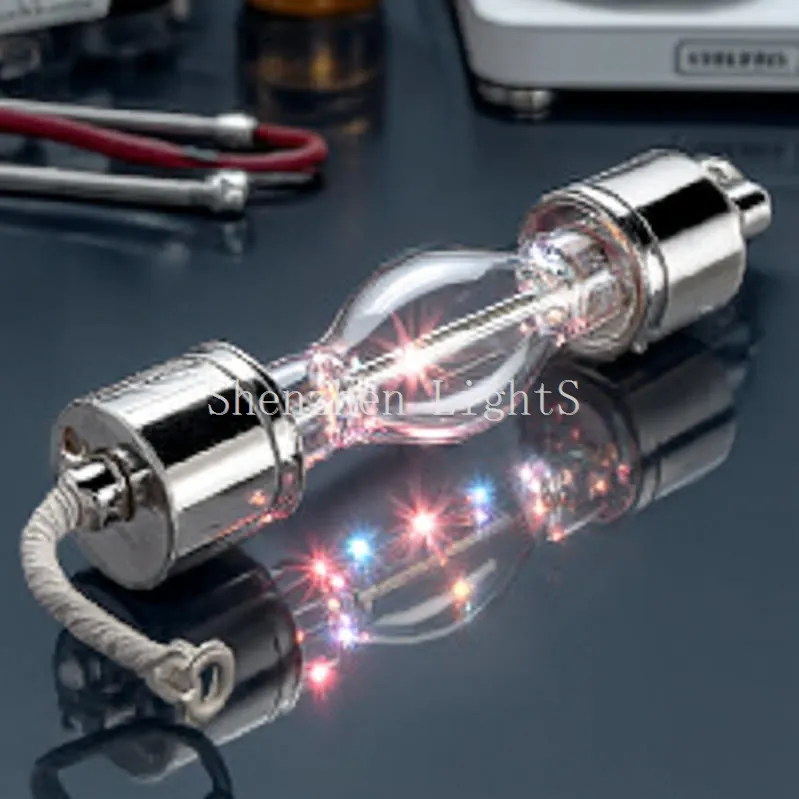
The structure of a typical xenon lamp consists of a sealed glass or quartz envelope that contains xenon gas at a specific pressure. Inside the envelope, there are two electrodes – an anode and a cathode. The electrodes are connected to an external power source, which provides the necessary electrical energy to initiate and sustain the discharge process.
Working in High - Pressure Environments
Initial Ionization
In high - pressure environments, the initial ionization of xenon gas is more challenging compared to normal - pressure conditions. The high density of gas molecules means that there are more collisions between electrons and gas atoms. To overcome this, a high - voltage pulse is typically applied across the electrodes. This high - voltage pulse provides enough energy to ionize a small number of xenon atoms, creating a conductive path for the subsequent flow of current.
The high - voltage pulse can be generated by a special ignition circuit. This circuit is designed to produce a short - duration, high - amplitude voltage spike. Once the initial ionization occurs, the gas becomes conductive, and a lower - voltage, continuous current can be maintained to keep the lamp lit.
Arc Formation and Stabilization
After the initial ionization, an arc is formed between the anode and the cathode. The arc is a highly conductive plasma region where the current flows through the ionized xenon gas. In high - pressure xenon lamps, the arc is more stable compared to low - pressure lamps. The high pressure restricts the expansion of the arc, keeping it concentrated between the electrodes.
To maintain a stable arc, the power supply needs to be carefully regulated. The current flowing through the lamp affects the temperature and pressure of the plasma. If the current is too high, the lamp may overheat, leading to damage to the envelope or electrodes. On the other hand, if the current is too low, the arc may extinguish.
Light Emission
The light emission in a high - pressure xenon lamp occurs mainly through two processes: atomic emission and molecular emission. In atomic emission, the excited xenon atoms emit light at specific wavelengths corresponding to the energy differences between their excited and ground states. These wavelengths are characteristic of xenon and give the lamp its distinctive color spectrum.
Molecular emission also plays a role, especially in high - pressure lamps. At high pressures, some xenon atoms can form molecules, and the transitions within these molecules also contribute to the overall light emission. The combination of atomic and molecular emission results in a broad - spectrum light output, which is similar to natural sunlight. This makes high - pressure xenon lamps suitable for applications where a high - quality, white - light source is required.
Applications in High - Pressure Environments
Automotive Headlights
One of the most common applications of high - pressure xenon lamps is in automotive headlights. Headlight HID Bulb and Xenon Headlight Bulbs are widely used due to their high brightness and excellent color rendering. In automotive applications, the lamps operate in a high - pressure environment within the sealed headlight housing.
The high - pressure xenon lamps provide better visibility at night compared to traditional halogen bulbs. The broad - spectrum light output is closer to natural sunlight, making it easier for drivers to distinguish objects on the road. Additionally, the high brightness of xenon lamps allows for longer - range illumination, enhancing safety.
Projectors
High - pressure xenon lamps are also used in projectors, such as those in movie theaters and large - scale presentations. Xenon HID Bulbs in projectors can produce a high - intensity, white light that is necessary to project clear and vivid images on large screens.
In a projector, the lamp needs to be precisely focused to direct the light onto the projection lens. The high - pressure operation of the xenon lamp ensures a stable and intense light source, which is crucial for high - quality projection.
Industrial and Scientific Applications
In industrial and scientific settings, high - pressure xenon lamps are used for various purposes. They can be used as light sources for spectroscopy, where the broad - spectrum light is used to analyze the absorption and emission characteristics of different materials. They are also used in photolithography, a process used in semiconductor manufacturing, where high - intensity light is required to expose photoresist materials.

Advantages of High - Pressure Xenon Lamps
High Brightness
High - pressure xenon lamps can produce a very high level of brightness. The high - pressure environment allows for a more efficient conversion of electrical energy into light energy. This makes them suitable for applications where a large amount of light is needed, such as in stadium lighting or large - area illumination.
Excellent Color Rendering
As mentioned earlier, the broad - spectrum light output of high - pressure xenon lamps results in excellent color rendering. This means that objects illuminated by xenon lamps appear more natural and true - to - color compared to other light sources. In applications like photography and art galleries, this is a highly desirable feature.
Long Lifespan
With proper design and operation, high - pressure xenon lamps can have a relatively long lifespan. The stable arc and the high - quality materials used in their construction contribute to their durability. This reduces the frequency of lamp replacement, resulting in lower maintenance costs over time.
Challenges and Considerations
Heat Dissipation
One of the main challenges in high - pressure xenon lamps is heat dissipation. The high - intensity light production generates a significant amount of heat. In high - pressure environments, the heat transfer is more difficult due to the high density of the gas. Special cooling mechanisms, such as heat sinks or forced - air cooling, may be required to prevent the lamp from overheating.
Electrode Erosion
The electrodes in high - pressure xenon lamps are subject to erosion over time. The high - temperature plasma and the high - energy collisions between electrons and gas atoms can cause the electrodes to wear down. This can affect the performance and lifespan of the lamp. To mitigate electrode erosion, special electrode materials and designs are used.
Contact Us for Your Xenon Lamp Needs
If you are in the market for high - quality xenon lamps for high - pressure applications, we are here to help. As a leading xenon lamp supplier, we offer a wide range of products, including Headlight HID Bulb, Xenon Headlight Bulbs, and Xenon HID Bulbs. Our lamps are designed to meet the highest standards of quality and performance.
Whether you need lamps for automotive, industrial, or scientific applications, we can provide you with the right solution. Contact us today to discuss your specific requirements and start a procurement negotiation. We look forward to working with you to meet your lighting needs.
References
- Waymouth, J. F. (1971). Electric Discharge Lamps. MIT Press.
- Kogelschatz, U. (2003). Principles of Gas Discharge and Plasma Engineering. Institute of Physics Publishing.
- Elenbaas, W. (1951). The High - Pressure Mercury Vapor Lamp. Elsevier.


